Recognizing the first clues
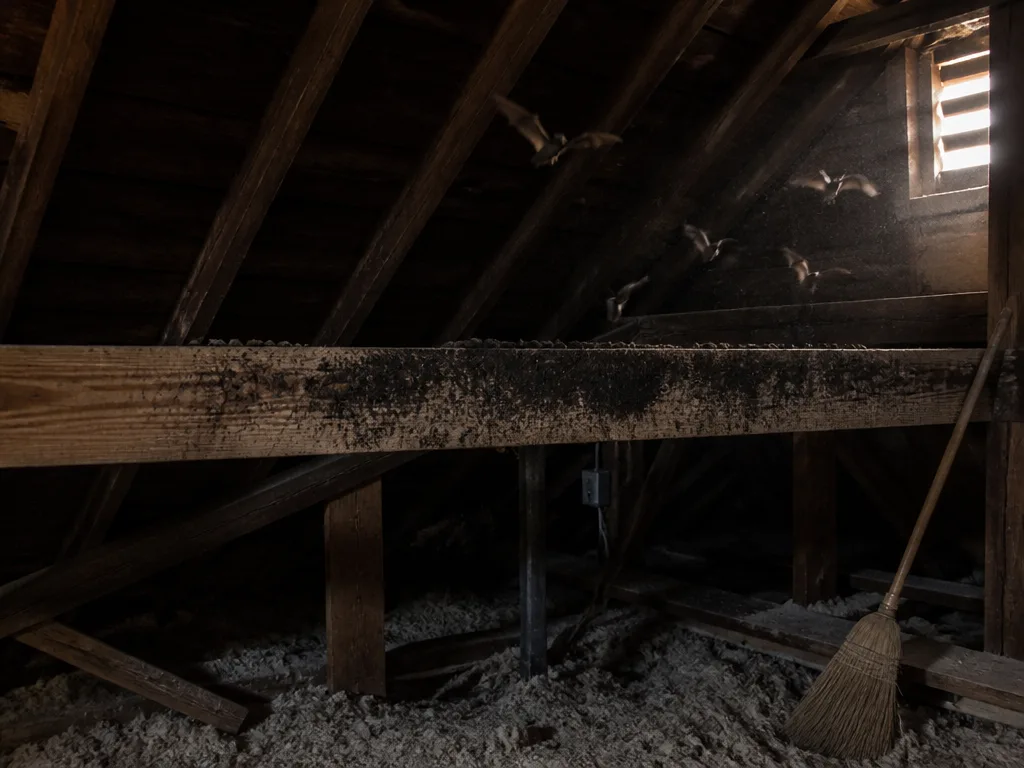
Across Massachusetts homes, bats often leave subtle marks before visible trouble. Dark streaks along beams or around attic openings can indicate guano fallout. If you notice a musty smell near crawl spaces or ceilings, that scent can be a sign of bat presence. Our pest control specialists in Massachusetts crews have seen these early indicators repeatedly and can help determine next steps without delay.
Noise is another real-world cue. A soft flutter near attic vents or as dusk settles can point to a roost overhead. In Massachusetts, where seasonal shifts bring bats indoors for shelter, listening for rapid, rhythmic sounds at night is worth noting. When several of these signals appear, it’s time to assess and plan a response with a statewide perspective in mind.
What the signs mean for your home
Bat activity usually means there is an access point somewhere on the exterior. A roof line gap, vent opening, or soffit seam can become an entry. Massachusetts homes across the state share these vulnerabilities because weather and wear create small openings that look harmless but aren’t. Our team evaluates the whole property to identify how bats could enter and where they might roost.
Guano accumulation matters too. Fresh droppings indicate ongoing use, while old staining can reveal past activity. Bats can carry droppings that irritate lungs or cause staining on walls and insulation. Massachusetts homeowners should treat any guano as a signal to contact a pest control specialist promptly for a careful assessment rather than trying to handle it alone.
Next steps for Massachusetts homeowners
Start with a no-pressure phone conversation with a pest control specialist from Massachusetts Bat Removal. We’ll review exterior entry points, discuss safe access methods, and outline a plan tailored to your home across Massachusetts. If access points are found, sealing those gaps is a practical, nonintrusive first step that protects the home while keeping occupants safe.
Along with inspections, be mindful of seasonal patterns. Bats are more active in spring and late summer, which means these are prime times for early checks. A proactive approach keeps risk low and reduces the chance of larger issues later in the year.
Practical tips that help between visits
Keep outdoor lights off or use motion-activated lighting near entry points to reduce outdoor activity around the home at night. Maintain chimney caps and vent screens to restrict access points. Clear trees or branches that overhang the roof to minimize battlement routes. These steps are simple, statewide actions you can take while planning a professional assessment with our Massachusetts crews.
- Inspect attic and crawlspace openings at least twice a year.
- Trim back limbs that touch the house, especially near roof lines.
- Schedule a routine check with a pest control specialist before peak seasons.